Our website is using cookies to deliver best possible experience to you. By using it you agree to cookies policy.


Can Poland achieve digital sovereignty whilst remaining primarily a consumer of foreign technologies? This is one of the most important questions for the future of our economy, public administration and digital sector. That is why it is worth taking a look at the new report ‘Polish technologies in the shadow of global players. How can we retain the value we create?’, prepared by Xopero Software | GitProtect and the CyberMadeInPoland Cybersecurity Cluster.
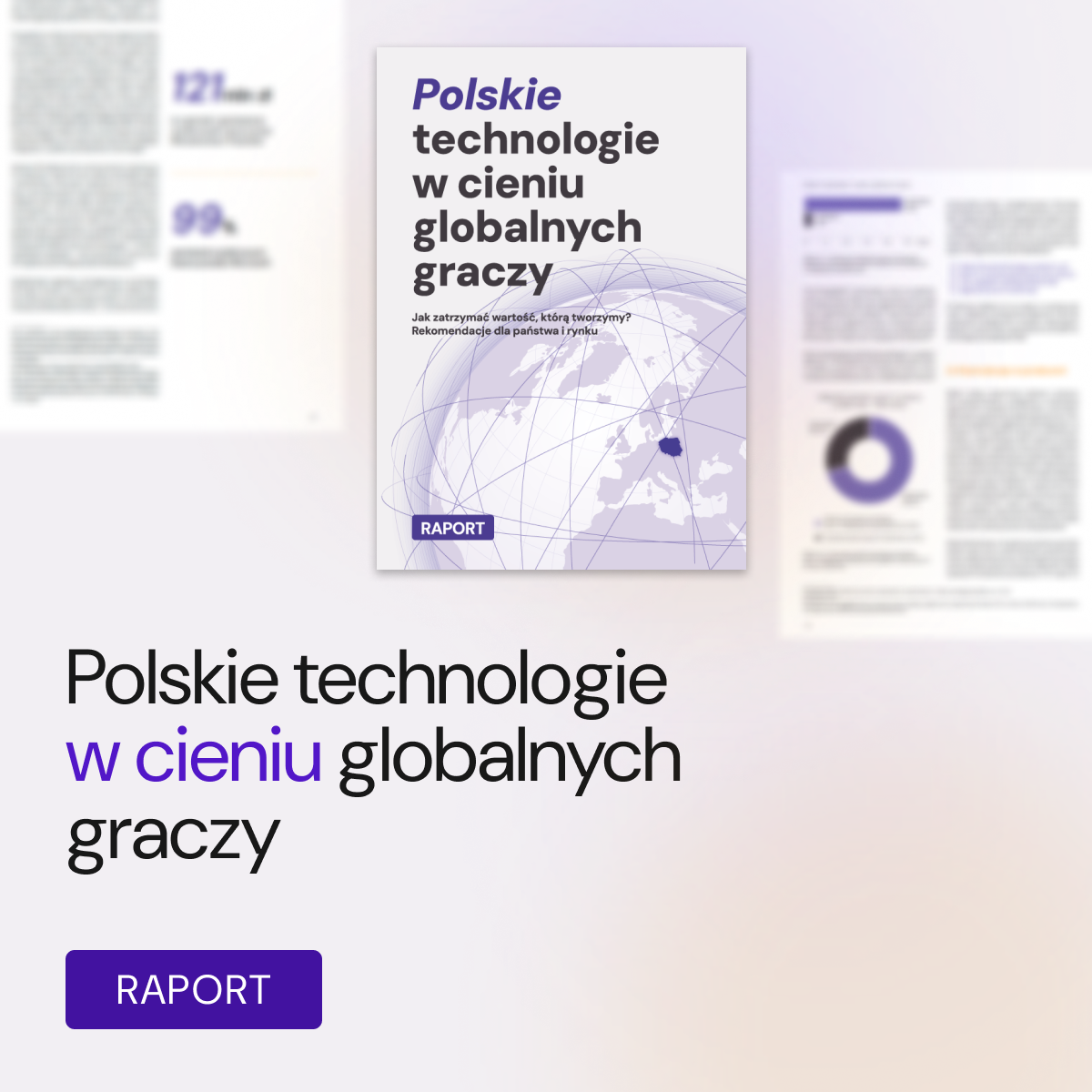
This report, running to over 100 pages, analyses the seven pillars of building Poland’s digital identity and contains specific recommendations for the public sector and the business community. The authors show that although the Polish IT market is growing very rapidly and is worth around 74 billion zlotys, a significant proportion of the economic value generated flows out of the country. According to data cited in the report, as much as 63 per cent of the market’s value consists of imports of foreign solutions, and Poland’s digital deficit exceeds 60 billion zlotys annually.
However, the report is not an argument for closing off the market or abandoning international cooperation. Quite the contrary. It shows how to create the conditions for Polish companies to compete more effectively, develop their own products, build capabilities and retain a larger share of the value generated within the country.
Commentary by Piotr Mieczkowski: digital sovereignty is not a slogan, but a strategy
The report also includes a commentary by Piotr Mieczkowski, managing director of the foundation, who points out that the debate on digital sovereignty often boils down to infrastructure or data localisation, whilst there is much more at stake.
The key question is not only where the servers are located, but who controls the technologies, who develops intellectual property, who builds expertise and who ultimately reaps the economic benefits of the digital transformation. Poland needs to strike a balance between utilising global solutions and strengthening its own expertise and technologies. Otherwise, we will remain primarily a consumer of innovations created elsewhere.
Case study: the National Cloud Operator
A particularly interesting part of the report is the case study on the National Cloud Operator (OChK). The authors use this example to explore, more broadly, what technological sovereignty means in practice and which models of cooperation with global suppliers actually strengthen national capabilities.
The analysis highlights the tension between rapid access to the cutting-edge technologies of global leaders and the development of domestic technological and business capabilities. This is an important contribution to the debate on what public investment and strategic partnerships in the fields of cloud computing, artificial intelligence and digital infrastructure should look like.
Regardless of the reader’s position, the OChK study compels us to ask a fundamental question: how should the digital transformation of the state be designed so that, in addition to modernising public services, it also strengthens the national technology ecosystem and its competitiveness?
Worth reading
Report ‘Polish technologies in the shadow of global players. How can we retain the value we create?’ is one of the most interesting publications of recent months concerning the future of the Polish digital sector. It combines data, market analyses, public recommendations and specific case studies. It is essential reading for the public administration, entrepreneurs, investors and anyone interested in the development of the Polish digital economy.
The report is available at: https://suwerenneit.pl.