Our website is using cookies to deliver best possible experience to you. By using it you agree to cookies policy.


Digital sovereignty does not mean that we have to produce everything ourselves. It means that, in key areas, the state, the economy, and citizens cannot be dependent on decisions made outside of Europe.
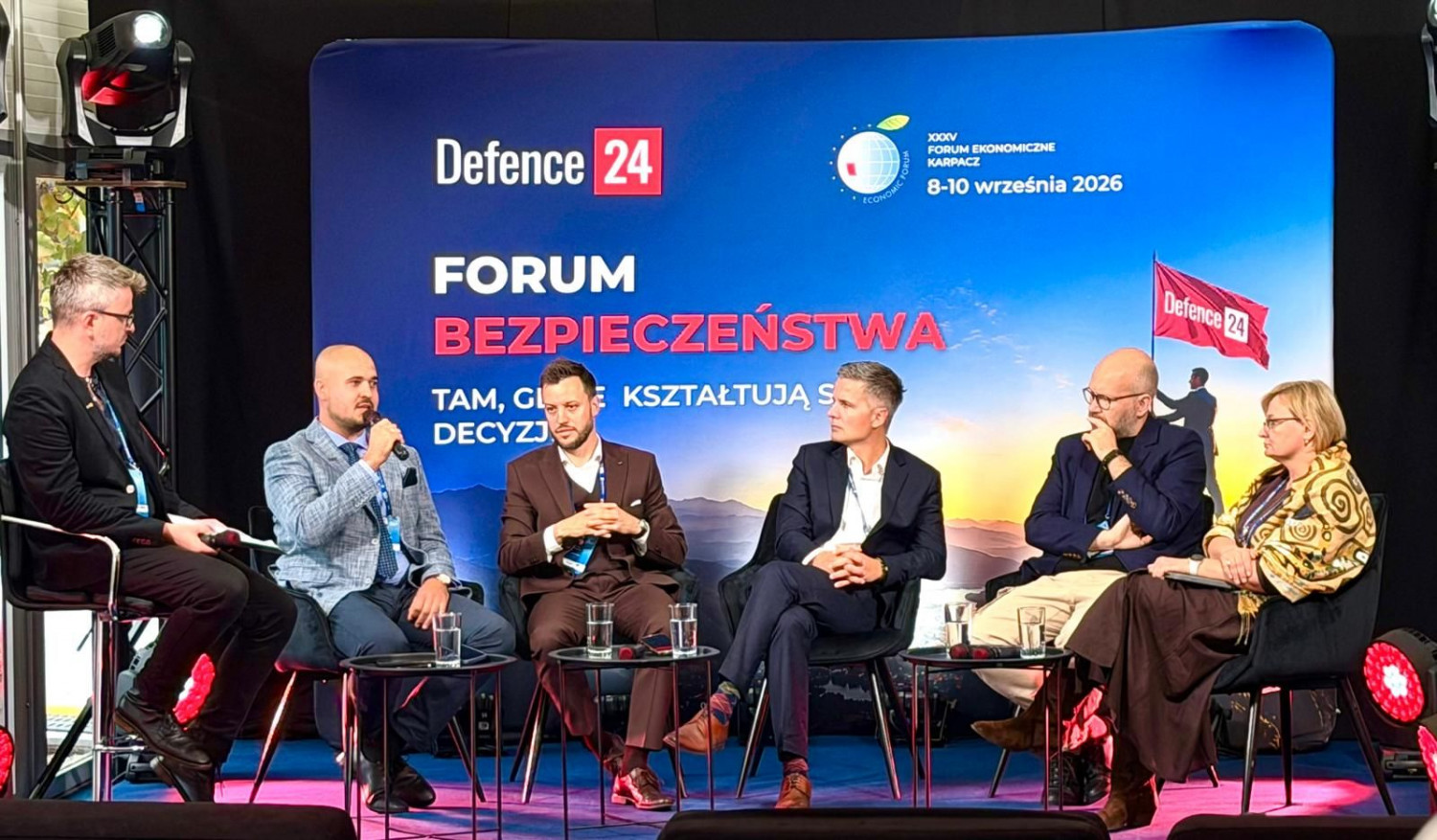
On September 9, 2026, during the Economic Forum in Karpacz, a debate on digital sovereignty took place in the CyberDefence24 zone. The discussion brought together experts representing government, academia, the media, and the technology sector, and its main goal was to seek answers to the question of how to build Poland’s and Europe’s digital resilience and independence in a world of growing geopolitical and technological tensions.
One of the panel’s most important conclusions was that digital sovereignty does not mean self-sufficiency. In public debate, there is often a belief that digital independence requires complete technological self-sufficiency. However, this assumption is unrealistic from both an economic and a technological perspective. No single country—not even the European Union—will be able to develop all components of the modern digital ecosystem on its own.
True digital sovereignty does not involve building technological walls around Europe or Poland. It means the ability to act independently where the security of the state, the economy, and citizens is at stake. It is about the ability to maintain the continuity of key services and infrastructure even in crisis situations, as well as retaining control over the most important resources, data, and technologies.
The panelists agreed that it is necessary to identify strategic sectors in which Poland and Europe should build their own capabilities, technologies, and strong suppliers. These areas primarily include:
healthcare,
energy,
defense,
critical infrastructure,
public administration, and key government services.
In these sectors, security of supply, control over data, and resilience to disruptions should become among the most important criteria for investment and procurement decisions.
During the debate, it was repeatedly emphasized that true digital sovereignty does not arise solely through regulations or government strategies. The foundation of digital independence lies primarily in strong technology companies that create competitive products and services capable of succeeding in international markets.
It is precisely the development of local and European suppliers that allows for the building of sustainable technological capabilities, retains added value within the economy, and creates jobs for highly qualified specialists. Equally important, globally competitive companies become a tool for economic and geopolitical influence for their countries and regions.
Therefore, the discussion on digital sovereignty cannot be limited solely to issues of infrastructure or cybersecurity. It must also encompass industrial policy, support for innovation, and the creation of conditions for the development of European technology champions.
Another key topic was the role of the public sector. The government is responsible for creating regulations, security standards, and procurement policies that can strengthen Europe’s technological potential.
However, this is not about closing off the market or eliminating competition. It is about consciously incorporating criteria such as the following into procurement processes:
data security,
the location of technological expertise,
supply chain resilience,
compliance with European regulations,
and Europe’s strategic economic and security interests.
Understood in this way, preferences for European suppliers are not a manifestation of protectionism, but rather an element of responsible economic and security policy.
If we want to have a serious discussion about digital sovereignty, we must begin to treat procurement, investment, and regulatory decisions as an integral part of national security policy. Digital independence will not be the result of a single program or a single law. It will be achieved through the consistent development of capabilities, support for innovative companies, and the deliberate strengthening of those areas that are critical to the functioning of the state and the economy.
We thank all participants for an inspiring discussion and the organizers of the Economic Forum for creating a space to discuss one of the most important challenges facing Poland and Europe today.
The debate was moderated by Piotr Pilewski, with the following participants: Piotr Mieczkowski representing the Digital Poland Foundation, Prof. Jolanta Perek-Białas, Rafał Pikuła, Patryk Słowik, and Piotr Nowak.
It was an important conversation not only about technology, but above all about security, economic competitiveness, and Europe’s future position in the global technology race.