Our website is using cookies to deliver best possible experience to you. By using it you agree to cookies policy.


Disinformation has become one of the most serious challenges to the information security of democratic states. False narratives influence citizens’ decisions, undermine trust in public institutions and the media, and can affect electoral processes. During a panel discussion on defending Poland’s infosphere, organised by the Digital Poland Foundation as part of the 35th Economic Forum in Karpacz, representatives from public administration, experts, regulators, fact-checking organisations and the media discussed the scale of the problem and ways to counter disinformation in Poland.
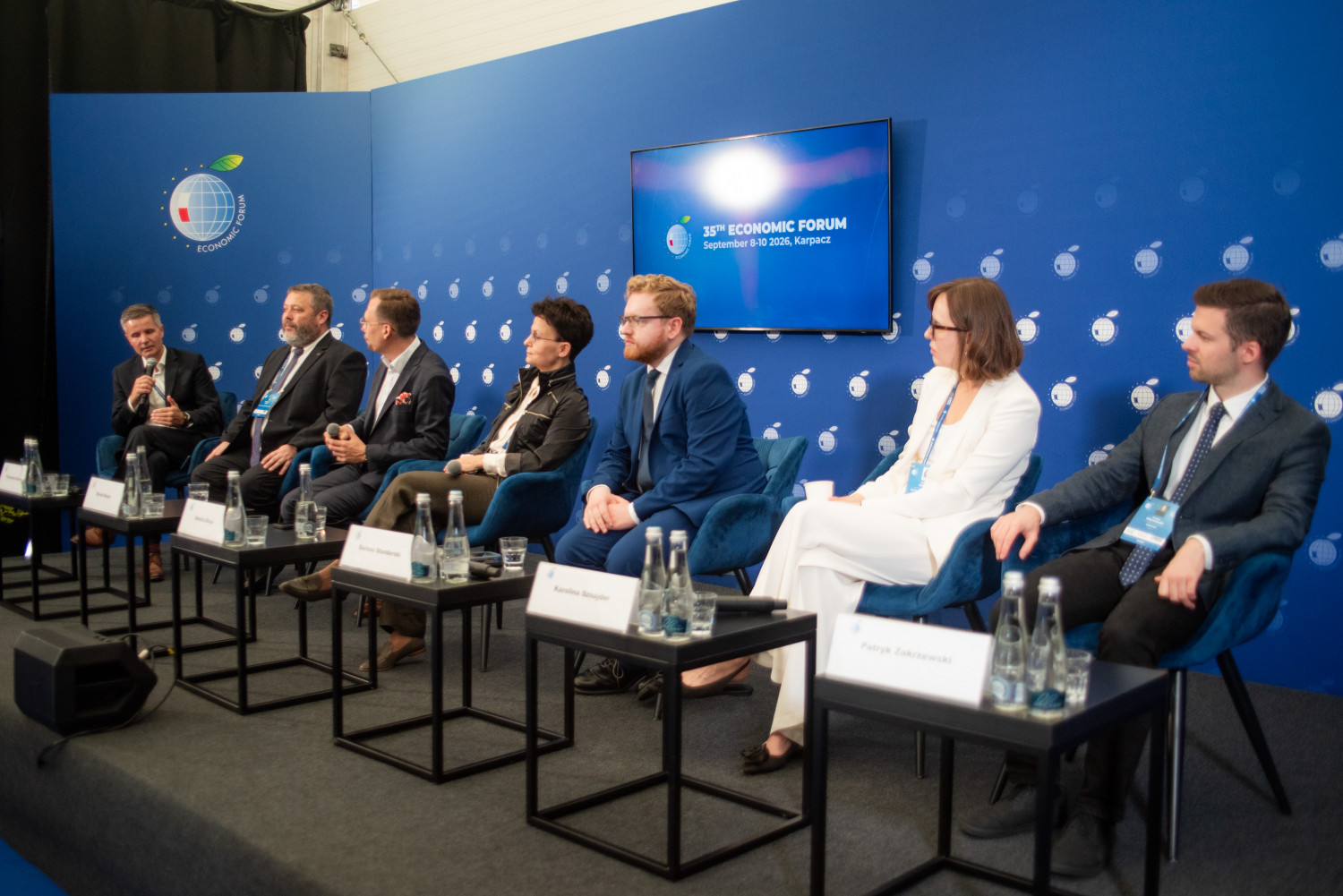
One of the key conclusions from the debate was the confirmation that disinformation is no longer an isolated phenomenon. As Patryk Zakrzewski from the Demagog Association pointed out, the findings of the report ‘Disinformation through the Eyes of Poles 2026’, prepared by the ‘Together Against Disinformation’ coalition, show that Poles encounter false information on a daily basis.
A particularly high level of manipulation can be observed in the energy sector, climate issues and health. It is precisely around these issues that narratives are most frequently constructed, exploiting emotions, public uncertainty and the limited knowledge of the audience. The scale of this phenomenon shows that the fight against disinformation cannot be limited solely to reacting to individual instances of fake news. Systemic measures are needed to strengthen society’s resilience to manipulation.
Dr Michał Marek from NASK PIB outlined the main channels through which disinformation is disseminated and the sources from which it originates. Many disinformation campaigns are still linked to narratives originating in Russia and Belarus, which are then adapted to the Polish social and political context.
At the same time, attention was drawn to a phenomenon that significantly increases the reach of disinformation. False content very often remains on the fringes of public debate until it is picked up by politicians or public figures. Only then does it gain widespread reach and enter the mainstream of discussion.
The effectiveness of digital platforms also remains a significant problem. As NASK’s analyses show, the process of removing harmful and false content by the largest online platforms still leaves much to be desired, which makes it difficult to limit the scale of disinformation’s impact.
Representatives of Poland’s largest media groups highlighted the economic dimension of the fight against disinformation.
Renata Gluza from TVN Warner Bros. Discovery emphasised that fact-checking, verifying sources and checking the accuracy of politicians’ statements are part of the day-to-day work of professional newsrooms. The problem, however, is that audiences are rarely willing to spend time checking information for themselves, and fact-checking in itself is not a profitable business model. That is why, for responsible media organisations, it is first and foremost part of their social mission.
A similar viewpoint was put forward by Karolina Sznajder from Ringier Axel Springer Polska. As she noted, creating disinformation is cheap, quick and often more effective at generating clicks than producing reliable content. Meanwhile, high-quality journalism requires investment, time and accountability for published material.
The issue of inequality in terms of responsibility for content also featured prominently in the debate. Traditional media are accountable for both the editorial content they publish and their advertisements. Digital platforms, on the other hand, operate according to different rules, even though their influence on the flow of information is often greater today than that of traditional media. Furthermore, the protection of intellectual property and the creation of mechanisms to ensure fair remuneration for content creators are becoming increasingly important.
A significant part of the discussion was devoted to legal regulations, in particular the implementation of the EU’s Digital Services Act (DSA).
Dr Dariusz Standerski from the Ministry of Digital Affairs outlined the measures being taken by the public administration to combat disinformation and the current status of work on implementing the new regulations. He pointed out that an effective state policy requires both appropriate legal tools and the consistent enforcement of liability for the dissemination of false information.
Przemysław Kuna from the Office of Electronic Communications, meanwhile, discussed the role of the regulator responsible for overseeing the application of the DSA provisions. A key challenge remains striking a balance between effectively countering disinformation and protecting freedom of speech, which remains one of the cornerstones of a democratic state.
The most important conclusion from the panel is simple: there is no single entity that can solve the problem of disinformation on its own. We need better coordination, better legislation and an appropriate operational framework within the media.
Effective defence of the Polish infosphere requires cooperation between public administration, regulators, digital platforms, the media, fact-checking organisations, the academic community and citizens themselves. We need both better regulations and more effective law enforcement, as well as the development of digital skills and media literacy.
Disinformation will remain one of the key challenges in the coming years. The quality of public debate, as well as national security and the stability of democratic processes, depend on how effectively we build society’s resilience to information manipulation.
The Digital Poland Foundation will continue to actively support the debate on information security and solutions that can increase Poland’s resilience to disinformation threats in the digital world.